
A Huntsville July can push your AC to run 14 or more hours a day. January can then drop overnight lows into the 20s. That swing makes heating and air conditioning in Huntsville AL one of the biggest line items on your utility bill and one of the most important systems in your home. A poorly sized or neglected unit costs you twice: once in wasted energy and again in early repairs.
The upside is simple. A system matched to North Alabama humidity, maintained twice a year, and replaced at the right time can cut heating and cooling costs noticeably. It can also add years to its service life. Below, we break down real price ranges, efficiency rules, repair-or-replace math, and the field lessons our technicians have learned in North Alabama homes.
Key Takeaways
- Humidity, not heat, is the hidden cost driver in North Alabama. An oversized AC cools fast but leaves moisture behind, so you lower the thermostat and pay more.
- Use the $5,000 rule before you approve a big repair. Multiply the unit’s age by the repair cost. If the result tops $5,000, replacement usually makes more financial sense.
- Schedule two tune-ups a year (spring for cooling, fall for heating). Dirty coils and weak capacitors cause most of the no-cool and no-heat calls we answer in July and January.
Why North Alabama Weather Is Hard on HVAC Systems
North Alabama weather works your HVAC system year-round. Huntsville sits in Climate Zone 3A (a warm, humid zone), which means long cooling seasons, high dew points, and short but sharp cold snaps. Your equipment rarely gets a true off-season.
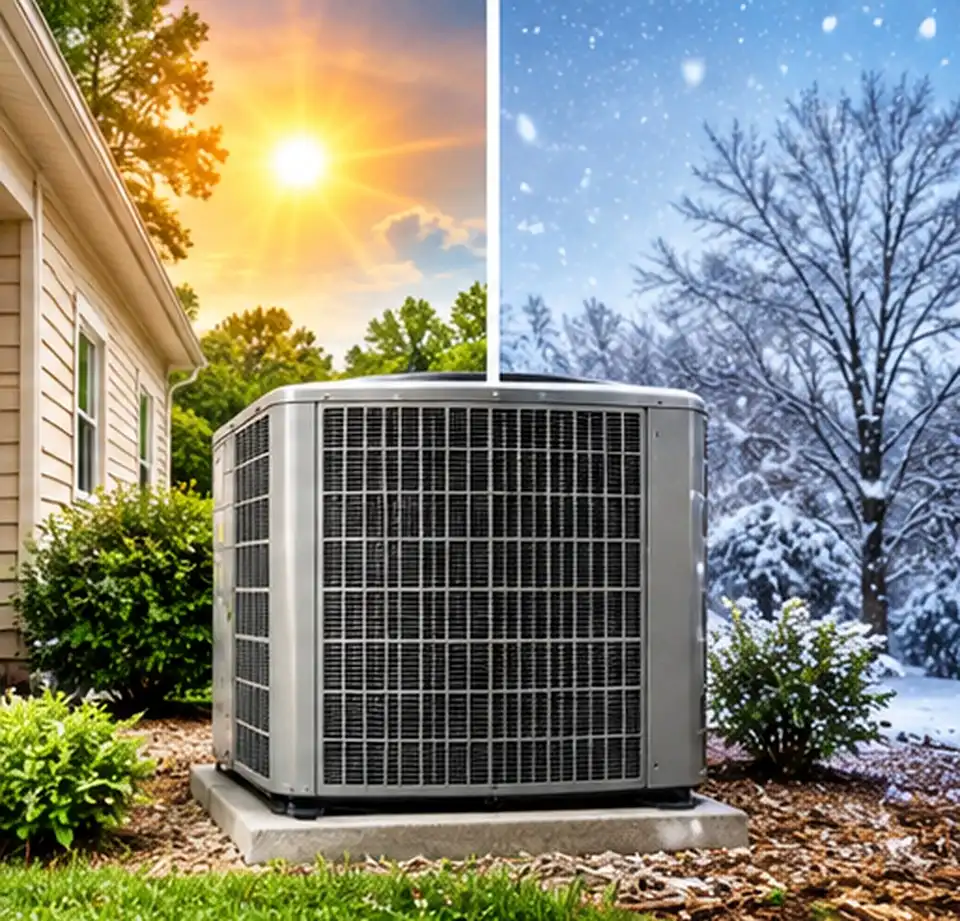
On recent AC service calls across Madison and Decatur, we keep seeing the same pattern. Systems run nonstop from late May through September. Then heat pumps get stressed in January when temperatures dip below freezing. That double duty shortens equipment life compared to milder regions.
| Season | Typical Huntsville Conditions | What It Does to Your System | Common Service Calls |
|---|---|---|---|
| Summer (Jun-Sep) | Highs near 90°F, dew points in the 70s | Long run times, heavy moisture removal | Failed capacitors, frozen coils, clogged drain lines |
| Fall (Oct-Nov) | Mild days, cool nights | Frequent switching between heat and cool | Thermostat issues, first-start furnace problems |
| Winter (Dec-Feb) | Lows in the 20s and 30s, occasional single digits | Heat pumps lean on backup heat strips | Defrost failures, ignitor and flame sensor faults |
| Spring (Mar-May) | Pollen, rain, rising humidity | Clogged filters and outdoor coils | Airflow restrictions, early-season AC breakdowns |
If you’ve spent a summer in Huntsville, you know the air feels heavy even at 75°F. That’s why heating and air conditioning in Huntsville AL has to handle moisture removal as seriously as temperature control.
Next step: Check your outdoor unit for pollen and grass buildup before May arrives.
Check Also: Heating and Cooling Huntsville AL: What Drives Your Bill
Heating and Air Conditioning in Huntsville AL Cost: 2026 Price Ranges

Heating and air conditioning in Huntsville AL cost depends on three things: equipment type, system size, and installation complexity. A simple capacitor swap costs a few hundred dollars. A full heat pump and air handler replacement can reach five figures. Below are the typical ranges we see across North Alabama in 2026.
You can review our full list of heating and cooling services to see which jobs we handle in-house.
Common Repair Costs
| Repair | Typical Huntsville Range | Notes From the Field |
|---|---|---|
| Diagnostic / service call | $89 – $150 | Often credited toward the repair |
| Capacitor replacement | $150 – $400 | Most common summer failure we see |
| Contactor replacement | $150 – $350 | Pitted contacts stop the outdoor unit |
| Clogged condensate drain clearing | $100 – $250 | Very common with Alabama humidity |
| Refrigerant leak search and repair | $300 – $1,500 | Recharge alone does not fix a leak |
| Blower motor replacement | $450 – $1,200 | ECM motors cost more but save energy |
| Furnace ignitor or flame sensor | $150 – $450 | Top cause of no-heat calls in January |
| Evaporator coil replacement | $1,500 – $3,000 | Often triggers a repair vs. replace talk |
| Compressor replacement | $1,800 – $3,500 | Rarely worth it on units over 10 years old |
New System Installation Costs
| System Type | Typical Installed Range | Expected Lifespan in North Alabama |
|---|---|---|
| Central AC only (2-5 tons) | $5,500 – $9,500 | 12 – 15 years |
| Heat pump system | $6,500 – $13,000 | 10 – 15 years |
| Gas furnace only | $3,800 – $7,500 | 15 – 20 years |
| Full AC + furnace replacement | $9,000 – $17,000 | 12 – 20 years |
| Ductless mini-split (per zone) | $3,500 – $7,500 | 12 – 18 years |
| Ductwork replacement (whole home) | $4,000 – $10,000 | 20 – 25 years |
What Drives Your Quote Up or Down
Your final price shifts based on several local factors. Our certified HVAC technicians frequently see these in Huntsville properties:
- Attic installs: Many older homes in South Huntsville place the air handler in a hot attic, which adds labor time.
- Ductwork condition: Leaky or undersized ducts can force extra work before a new system performs well.
- Electrical upgrades: Some older panels need a new breaker or disconnect for modern equipment.
- Efficiency tier: Higher SEER2 and variable-speed equipment costs more upfront but less to run.
- Permits and code: City of Huntsville and Madison County jobs require proper permitting.
Next step: Ask every contractor for a line-item quote that separates equipment, labor, and permit fees.
Cheapest vs. Best: What You Actually Pay Over 15 Years
The lowest bid rarely produces the lowest lifetime cost. Homeowners searching for the cheapest heating and air conditioning in Huntsville AL often focus on install price alone. Operating cost and repair frequency matter just as much.
We inspected a Decatur home last summer with a bargain-installed 3-ton unit. The ducts were never sealed, and the system was one size too large. The owner was paying more each month than a neighbor with a larger house.
| Factor | Lowest-Bid Install | Quality Install |
|---|---|---|
| Upfront price (3-ton heat pump) | ~$6,500 | ~$9,000 |
| Load calculation (Manual J) | Often skipped | Always performed |
| Duct sealing and testing | Rarely included | Included or quoted |
| Average yearly repairs | $300 – $600 | $100 – $200 |
| Estimated 15-year energy + repair cost | Higher | Lower |
| Warranty registration | Sometimes missed | Completed and documented |
The best heating and air conditioning in Huntsville AL is the system that is correctly sized, properly installed, and regularly maintained. Brand matters less than installation quality.
Next step: Ask any installer whether they perform a Manual J load calculation (a room-by-room heat gain and loss assessment). If they say no, keep looking.
SEER2 and Efficiency Standards for Alabama Homes

SEER2 is the current federal efficiency rating for cooling equipment. SEER2 (Seasonal Energy Efficiency Ratio 2) measures cooling output per unit of electricity under more realistic test conditions than the old SEER scale.
HSPF2 (Heating Seasonal Performance Factor 2) does the same for heat pump heating. Alabama falls in the Southeast region, which has stricter minimums than northern states.
| Equipment Type | Federal Minimum (Southeast, since 2023) | ENERGY STAR Level | What It Means for You |
|---|---|---|---|
| Split AC under 45,000 BTU | 14.3 SEER2 | 15.2 SEER2 or higher | Most homes under 3.5 tons |
| Split AC 45,000 BTU and up | 13.8 SEER2 | 15.2 SEER2 or higher | Larger homes |
| Split heat pump | 14.3 SEER2 / 7.5 HSPF2 | 15.2 SEER2 / 7.8 HSPF2 | Best fit for most Huntsville homes |
| Gas furnace | 80% AFUE (installation minimum) | 95% AFUE or higher | AFUE = share of fuel turned into heat |
You can compare certified models through ENERGY STAR’s heating and cooling product finder. Moving from a 10 SEER unit to a 16 SEER2 unit can cut cooling energy use by roughly a third.
The Refrigerant Change Every Homeowner Should Know
New equipment now uses different refrigerant. As of January 1, 2025, manufacturers stopped producing most new residential systems built for R-410A. New units use A2L refrigerants such as R-454B and R-32, which have lower global warming impact.
| Refrigerant | Status in 2026 | What It Means |
|---|---|---|
| R-22 (Freon) | Production ended in 2020 | Very expensive to recharge; replace the system |
| R-410A | Still serviced; no longer in most new systems | Prices rising as supply shrinks |
| R-454B / R-32 | Standard in new equipment | Requires newer tools and trained technicians |
Next step: Check the data plate on your outdoor unit to see which refrigerant it uses before you approve a recharge.
Heat Pump vs. Gas Furnace for Huntsville Winters
Heat pumps fit most Huntsville homes well. North Alabama winters are short, and most winter days stay above the temperature where modern heat pumps lose efficiency. Gas furnaces still make sense in homes with existing gas lines or where owners want strong heat during rare deep freezes.
The U.S. Department of Energy’s heat pump overview explains how these systems move heat instead of creating it. That’s why they use far less electricity than electric resistance heat.
Heat Pump Pros
- One system handles both heating and cooling
- Lower operating cost in mild Alabama winters
- Strong dehumidification in summer
- No combustion, so no carbon monoxide risk
Heat Pump Cons
- Relies on backup heat strips below the high 20s, which raises bills
- Shorter lifespan than furnaces in heavy-use climates
- Needs clean outdoor coils to defrost properly
Gas Furnace Pros
- Delivers hotter supply air during cold snaps
- Longer lifespan (15 to 20 years)
- Works well paired with a heat pump in a dual-fuel system
Gas Furnace Cons
- Requires annual combustion and CO safety checks
- Needs a separate AC for cooling
- Monthly gas service charges apply even in summer
When a furnace acts up, our team handles furnace repair and safety checks including heat exchanger inspections. For homes with heat pumps, we offer heat pump maintenance and repair built around defrost and backup heat testing.
Next step: Look at last January’s power bill. A big spike often signals your heat pump is leaning on backup strips too often.
Repair vs. Replace: The Numbers That Decide It
Age and repair cost decide most replacement questions. We use the $5,000 rule as a starting point: multiply the unit’s age by the repair cost. If the total tops $5,000, replacement is usually the smarter spend.

Example: A 12-year-old AC needs a $900 coil repair. 12 × $900 = $10,800. That job points toward replacement.
| Factor | Lean Toward Repair | Lean Toward Replace |
|---|---|---|
| System age | Under 8 years | Over 12 years |
| Repair cost | Under 25% of new system price | Over 40% of new system price |
| Refrigerant | R-410A or newer | R-22 |
| Repair history | First major repair | Third repair in two years |
| Energy bills | Stable year over year | Rising with no rate change |
| Comfort | Even temps, good humidity | Hot rooms, clammy air |
| SEER rating | 14 SEER or higher | 10 to 13 SEER |
Our crews handle AC repair in Huntsville every day. We give you both numbers when replacement is close, so the choice stays yours.
Next step: Find your unit’s manufacture date on the data plate and run the $5,000 math before your next service call.
Troubleshooting Steps Before You Call a Technician
Several common problems have simple fixes. Our certified HVAC technicians frequently arrive to find a tripped breaker or a clogged filter. These steps can save you a service fee.
- Check the thermostat. Confirm it’s set to Cool or Heat and the setpoint is correct. Replace batteries if the screen is blank.
- Inspect the air filter. A clogged filter restricts airflow and can freeze the coil. Replace it if you can’t see light through it.
- Reset the breakers. Check both the indoor air handler and outdoor unit breakers. Reset once only.
- Look at the outdoor unit. Make sure the fan spins and nothing blocks the coil. Clear leaves and grass clippings.
- Check the condensate drain. Many systems have a float switch that shuts off cooling when the drain backs up.
- Open supply vents. Closed vents raise pressure and reduce performance.
- Look for ice. If the indoor coil or refrigerant line is frozen, switch the system to Off and run the Fan only for a few hours.
Call a professional right away if you notice:
- A burning or electrical smell
- A gas odor near the furnace (leave the home and call your gas utility first)
- A breaker that trips again after one reset
- Buzzing from the outdoor unit with no fan movement
For urgent breakdowns, our crews provide emergency HVAC help seven days a week across North Alabama.
Next step: Tape this checklist inside your air handler closet door.
Seasonal Maintenance Checklist and Costs
Twice-yearly maintenance prevents most breakdowns. Spring tune-ups prepare the cooling side.
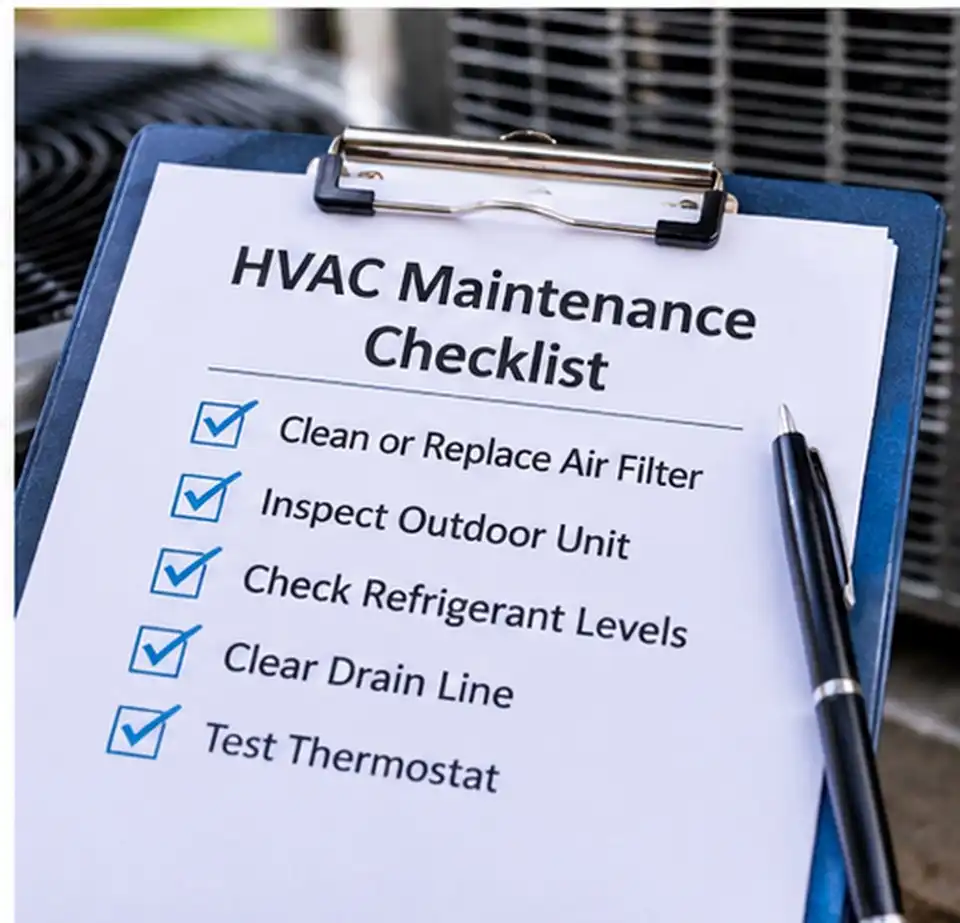
Fall tune-ups prepare the heating side and include safety checks. ENERGY STAR notes that dirty filters and coils are among the top causes of wasted energy.
| Service | Typical Cost | Best Timing | Main Benefit |
|---|---|---|---|
| AC tune-up | $89 – $150 | March – April | Catches weak capacitors before July |
| Furnace / heat pump tune-up | $89 – $150 | September – October | Tests ignition, defrost, and CO safety |
| Annual maintenance plan (2 visits) | $150 – $300 / year | Year-round | Priority scheduling, repair discounts |
| Duct cleaning | $350 – $700 | Every 3 – 5 years | Better airflow and less dust |
| Coil cleaning (indoor) | $150 – $400 | As needed | Restores efficiency and airflow |
Spring Cooling Checklist
- Replace the air filter
- Clean the outdoor condenser coil
- Test the capacitor and contactor
- Flush the condensate drain line
- Check refrigerant pressures and temperature split
- Tighten electrical connections
Fall Heating Checklist
- Inspect the heat exchanger for cracks
- Test carbon monoxide levels
- Clean the flame sensor and check the ignitor
- Test heat pump defrost and backup heat strips
- Verify thermostat calibration
Our seasonal tune-up plans cover both lists and keep a service record for warranty purposes.
Next step: Book your spring visit by mid-March, before the first heat wave fills every schedule in town.
Humidity Control: The Overlooked Comfort Factor
Humidity control decides how comfortable your home feels. Indoor humidity should stay between 40% and 50%. Above 60%, you invite mold, dust mites, and that sticky feeling that makes 74°F feel like 80°F.
Residential heating and air conditioning in Huntsville AL has to remove moisture, not just heat. Here’s what helps:
- Right-size the AC. Oversized units short cycle and stop before removing moisture.
- Choose variable-speed equipment. Longer, slower cycles pull more water from the air.
- Set the fan to Auto. Running the fan On blows moisture from the wet coil back into your home.
- Add a whole-home dehumidifier for basements, crawlspace homes, and lake properties near Guntersville.
- Seal ductwork in attics and crawlspaces to keep humid air out.
Next step: Buy a $15 hygrometer and check your indoor humidity on a rainy summer afternoon.
How to Choose the Right Huntsville HVAC Contractor
The right contractor matters more than the brand on the unit.

Use this checklist when comparing companies for heating and air conditioning in Huntsville AL.
- Verify licensing. Alabama requires HVAC contractors to hold a state license through the Alabama Board of Heating, Air Conditioning and Refrigeration Contractors.
- Confirm insurance. Ask for proof of liability and workers’ compensation coverage.
- Request a load calculation. A proper quote starts with Manual J, not a guess based on the old unit.
- Get written, itemized pricing. Transparent pricing protects you from surprise add-ons.
- Ask about refrigerant training. Technicians need EPA Section 608 certification and A2L training.
- Check availability. A company that works seven days a week can help during July heat and January freezes.
- Read local reviews. Look for comments from your own neighborhood or town.
At HVAC Repair Huntsville, we’re Local Gov Certified, we explain options in plain language, and we put pricing in writing before work begins.
Next step: Use these seven points to compare at least two quotes side by side.
Serving Huntsville and North Alabama Communities
Local service means faster response. We serve Huntsville and the surrounding Tennessee Valley, from Hampton Cove to Harvest. You can see all 27 North Alabama communities we cover on our service area page.
Each area has its own HVAC quirks:
| Community | Common Home Type | What We See Most |
|---|---|---|
| Huntsville | Mix of 1960s ranch and new builds | Aging ductwork, attic air handlers |
| Madison | Newer subdivisions | Oversized systems, short cycling |
| Decatur | Older homes near the river | High humidity, drain line clogs |
| Athens | Rural and suburban homes | Heat pumps with heavy backup heat use |
| Harvest / Meridianville | Growing new construction | Builder-grade units failing early |
Homeowners west of I-565 can book HVAC service in Madison, and those across the river can schedule Decatur heating and cooling with the same crews and pricing.
Next step: Confirm your town is on our list before booking a visit.
FAQs
How long does an AC system last in Huntsville’s climate?
Most central AC systems last 12 to 15 years in North Alabama. Long cooling seasons and high humidity wear parts faster than in milder climates. Regular maintenance pushes systems toward the top of that range.
Why does my heat pump blow lukewarm air in winter?
Heat pumps deliver air around 90°F to 100°F, which feels cooler than furnace air. That’s normal. If air feels cold or the outdoor unit stays iced over for more than 30 minutes, the defrost system needs attention.
Is the federal tax credit for heat pumps still available?
No. The federal 25C energy efficiency tax credit ended for equipment installed after December 31, 2025. Check with TVA EnergyRight and Huntsville Utilities for any current local rebate programs.
What size AC does a 2,000-square-foot Huntsville home need?
There is no single answer. Many 2,000-square-foot homes need 3 to 4 tons, but insulation, windows, and sun exposure change the result. A Manual J calculation gives the accurate size.
Should I close vents in unused rooms to save money?
No. Closing vents raises duct pressure, reduces airflow, and can freeze the coil. Your system is designed to move a set amount of air.
How often should I change my air filter during summer?
Change 1-inch filters every 30 to 60 days during heavy summer use. Pets, pollen season, and nearby construction can shorten that window. Thicker 4-inch media filters last 6 to 12 months.
Can I add a smart thermostat to an older system?
Usually, yes. Most smart thermostats need a C-wire (common wire) for steady power. We can add one during a service visit if your system lacks it.
Your Next Step for Year-Round Comfort
Smart heating and air conditioning in Huntsville AL comes down to three moves: size it right, maintain it twice a year, and replace it before repairs drain your budget. Use the cost tables above to judge any quote. Run the $5,000 rule before big repairs.
When you’re ready, request a written estimate from our certified team. We’ll inspect your system, explain your options in plain language, and give you a price before any work begins.