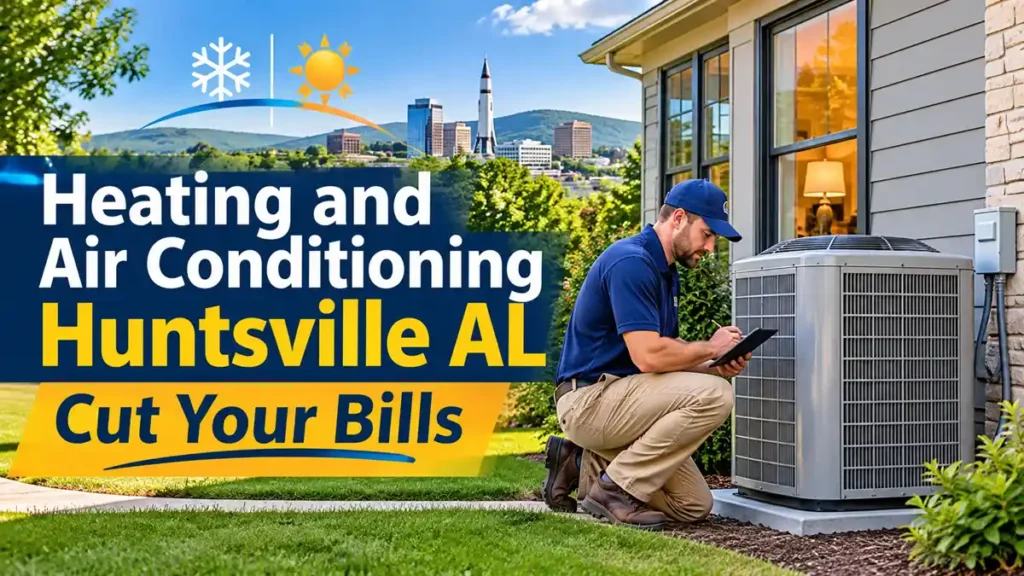
A Huntsville summer tests every cooling system in the Tennessee Valley. July highs reach about 90°F, and humidity often sits above 70% before breakfast. Your AC is not just cooling the air. It is also pulling water out of it, hour after hour, for five straight months. Then January brings frost, a few nights in the teens, and a sudden switch to heating mode. That two-season strain makes heating and air conditioning Huntsville AL a year-round budget item, not a summer-only concern. The system you choose, and the company that services it, decides how much you pay each month and how long the equipment lasts.
We wrote this guide from what our certified HVAC technicians see on real service calls across Madison County. It covers costs, efficiency rules, repair decisions, and how to compare local providers.
Points
- Humidity control matters as much as temperature. An oversized AC cools fast but leaves your home clammy, which pushes you to lower the thermostat and raise your bill.
- All new installs now use A2L refrigerants (R-454B or R-32), and Alabama’s minimum is 14.3 SEER2 for most split-system ACs. Older R-410A repairs will keep getting pricier.
- The federal 25C tax credit ended for systems installed after December 31, 2025. In 2026, the best savings come from right-sized equipment, TVA EnergyRight programs, and steady maintenance.
Heating and Cooling Huntsville AL: What Drives Your Bill
Why North Alabama’s Climate Is Hard on HVAC Systems
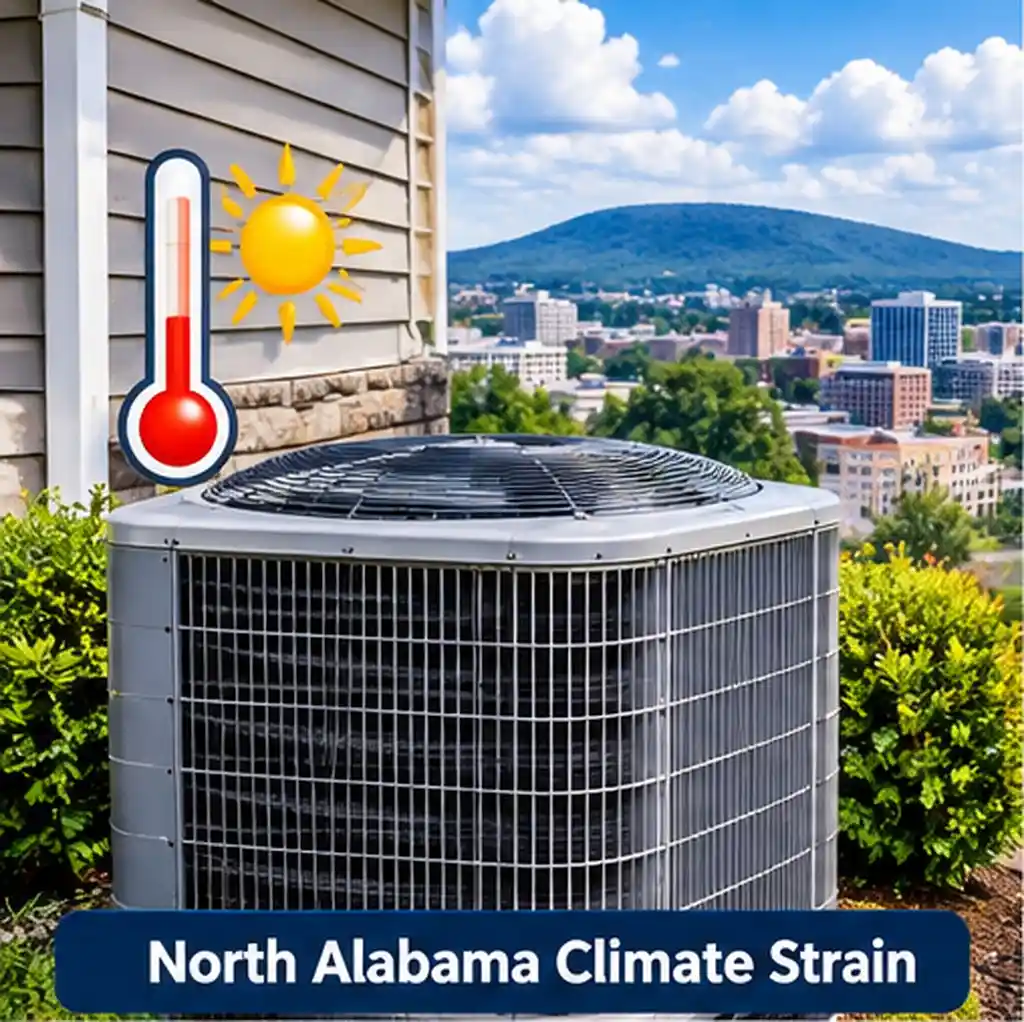
North Alabama’s climate demands dual-mode performance. Your system must handle heavy latent heat (moisture in the air) in summer and quick temperature swings in winter. Few regions ask equipment to do both this often.
| Climate Factor | Huntsville Average | What It Means for Your System |
|---|---|---|
| July average high | ~90°F | Long compressor run times from May to September |
| Summer humidity | 70%+ in mornings | Coils must remove moisture, not just heat |
| January average low | ~32°F | Heat pumps run often; backup heat kicks in on cold nights |
| Spring/fall swings | 30°F+ daily changes | Frequent switching between heat and cool modes |
| Pollen season | March to May | Filters clog fast; airflow drops |
| Severe storms | Spring and fall | Power surges damage capacitors and control boards |
On recent AC service calls across Madison and Decatur, we keep finding the same pattern. Homeowners run the thermostat at 70°F, but the house still feels sticky. The cause is usually an oversized unit that short-cycles (turns on and off too fast to dry the air). A properly sized system runs longer, gentler cycles and removes more moisture.
If you’ve spent a summer in Huntsville, this makes complete sense: dry air at 75°F feels better than damp air at 71°F. Start by checking your indoor humidity with a $15 hygrometer. Anything above 55% points to a sizing or airflow problem.
Residential vs. Commercial HVAC: What’s the Difference?
Residential and commercial HVAC differ in equipment type, load size, and service schedules. Most homes use split systems. Most businesses use rooftop package units.
| Feature | Residential | Light Commercial |
|---|---|---|
| Common equipment | Split AC, heat pump, gas furnace | Rooftop units (RTUs), multi-zone systems |
| Typical size | 1.5 to 5 tons | 5 to 25+ tons per unit |
| Maintenance schedule | Twice a year | Quarterly or monthly |
| Main concern | Comfort, energy bills | Uptime, tenant comfort, code compliance |
| Thermostat control | Smart thermostat | Building automation systems |
Residential heating and air conditioning Huntsville AL service focuses on comfort, indoor air quality, and monthly bills. Commercial work centers on keeping a business open. Our teams handle both, and you can see the full list of heating and cooling services we offer before you call. The right technician for a 3-ton heat pump is not always the right one for a 20-ton rooftop unit.
Ask any provider which type of system they service most. That answer tells you where their real experience lies.

Heating and Air Conditioning Huntsville AL Cost: 2026 Price Ranges
Costs depend on system type, refrigerant, and labor time. The ranges below reflect what we see across North Alabama in 2026, including the price shift from the refrigerant transition.
Common Repair Costs
| Repair | Typical Huntsville Range | Notes |
|---|---|---|
| Diagnostic visit | $89 to $150 | Often applied toward repair cost |
| Capacitor replacement | $150 to $350 | Most common summer failure |
| Contactor replacement | $150 to $300 | Pitted contacts from storm surges |
| Condensate drain clearing | $100 to $250 | Algae clogs are common in humid months |
| Blower motor | $450 to $1,200 | ECM motors cost more than PSC motors |
| Refrigerant leak repair + recharge | $400 to $1,800+ | R-410A prices keep rising |
| Evaporator coil | $1,200 to $2,800 | Often triggers a replace discussion |
| Compressor replacement | $1,800 to $3,500+ | Rarely worth it on systems over 10 years old |
| Furnace igniter / flame sensor | $150 to $400 | Top winter no-heat call |
New System Installation Costs
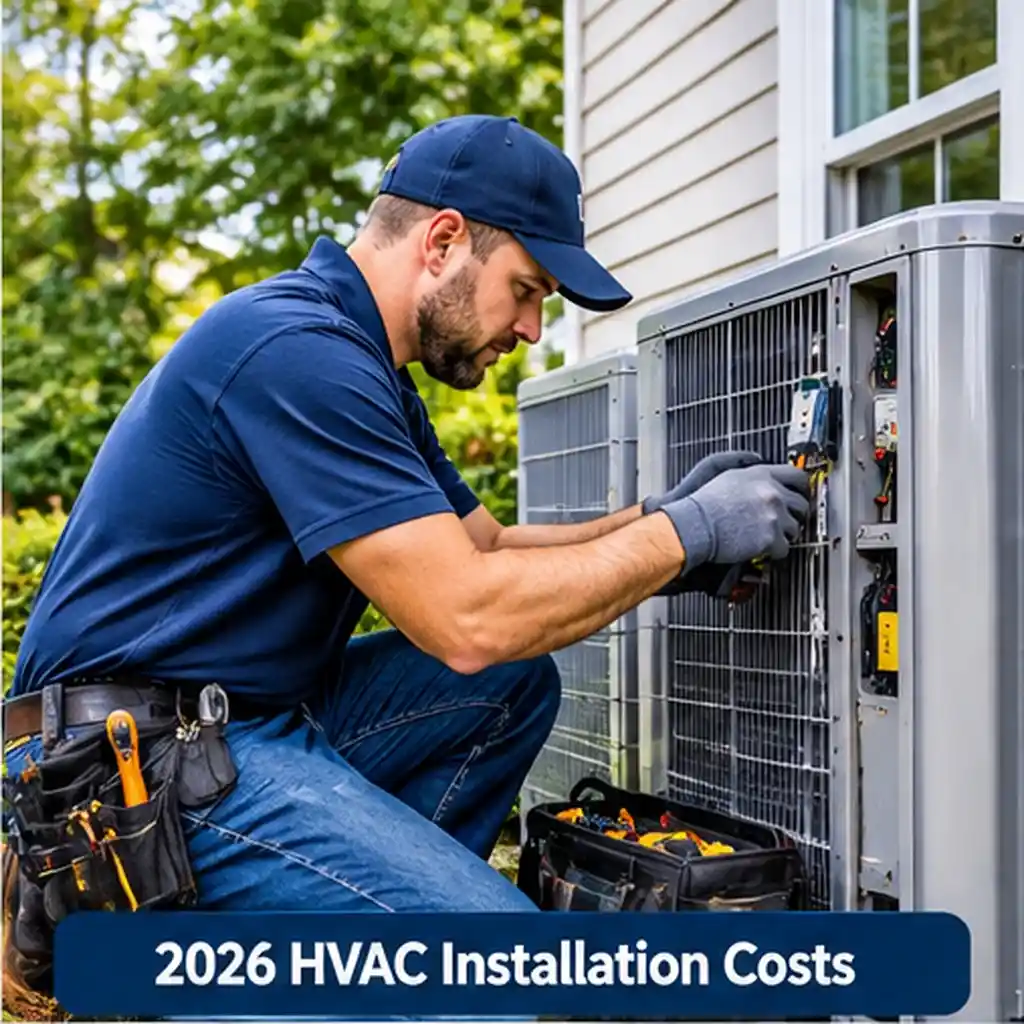
| System | Typical Installed Range | Best For |
|---|---|---|
| Central AC only (2.5 to 4 tons) | $5,500 to $9,500 | Homes with a working gas furnace |
| Heat pump split system | $7,000 to $13,000 | Most Huntsville homes |
| Gas furnace only | $3,500 to $7,000 | Homes with existing natural gas |
| Dual-fuel system | $9,500 to $16,000 | Larger homes wanting gas backup |
| Ductless mini-split (single zone) | $3,500 to $6,500 | Additions, bonus rooms, garages |
| Variable-speed heat pump | $11,000 to $18,000 | Best humidity control |
The heating and air conditioning Huntsville AL cost you pay also depends on ductwork condition. Leaky or undersized ducts can add $1,500 to $5,000 to a replacement. We always inspect ducts before quoting a new system, because a new unit on bad ducts underperforms.
What Drives the Final Price
- Measure the load. A Manual J calculation (a room-by-room heat gain and loss study) sets the correct tonnage.
- Choose the efficiency level. Each SEER2 step up raises cost and lowers monthly bills.
- Check the ductwork. Leaks, crushed runs, and poor returns add labor.
- Confirm electrical needs. Older panels may need a new breaker or disconnect.
- Account for refrigerant. A2L systems need updated line sets in some homes.
Request a written, itemized quote that lists each of these five items separately.
Efficiency Standards: SEER2, HSPF2, and the Refrigerant Change
SEER2 measures how efficiently a system cools across a season. The “2” means it uses tougher test conditions introduced in January 2023, so numbers look lower than old SEER ratings for the same equipment. HSPF2 does the same job for heat pump heating.
Southeast Region Minimums (Alabama)
| Equipment | Minimum Rating | Old Equivalent |
|---|---|---|
| Split AC under 45,000 BTU | 14.3 SEER2 | 15 SEER |
| Split AC 45,000 BTU and up | 13.8 SEER2 | 14.5 SEER |
| Split heat pump | 14.3 SEER2 / 7.5 HSPF2 | 15 SEER / 8.8 HSPF |
| Packaged AC | 13.4 SEER2 | 14 SEER |
| Packaged heat pump | 13.4 SEER2 / 6.7 HSPF2 | 14 SEER / 8.0 HSPF |
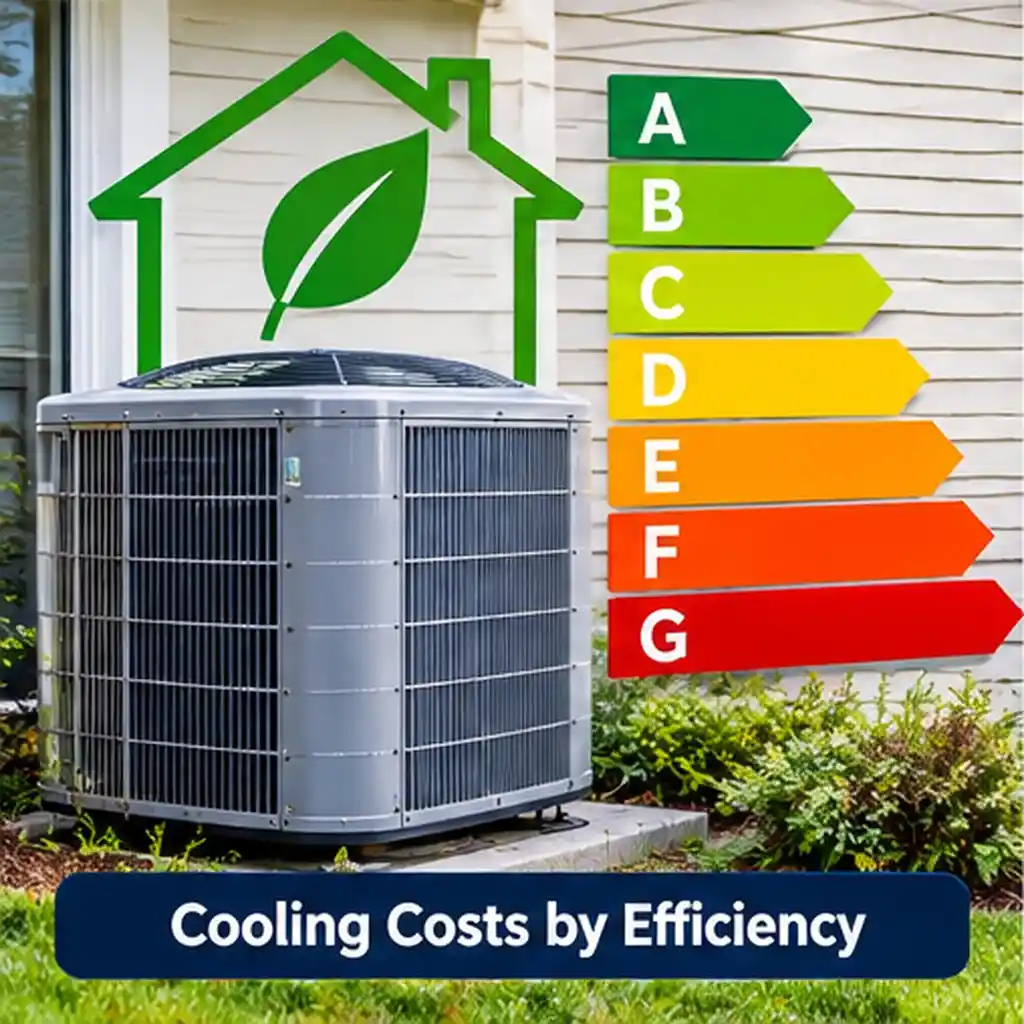
Estimated Cooling Cost by Efficiency (3-ton system, Huntsville usage)
| Efficiency | Estimated Annual Cooling Cost | Savings vs. 10 SEER |
|---|---|---|
| 10 SEER (older system) | ~$900 | Baseline |
| 14.3 SEER2 (new minimum) | ~$600 | ~$300/year |
| 16 SEER2 | ~$535 | ~$365/year |
| 18+ SEER2 (variable-speed) | ~$475 | ~$425/year |
Estimates assume local residential electric rates and typical cooling hours; your bill will vary.
The refrigerant transition adds another factor. Under the federal AIM Act, new systems now use A2L refrigerants like R-454B and R-32. Supply of R-410A is shrinking, so recharging an older system costs more each year. The U.S. Department of Energy explains how air-source heat pumps provide efficient heating and cooling in mild-winter climates like ours.
Check the yellow EnergyGuide label or data plate on your outdoor unit. If it lists R-22 or a SEER below 13, start planning for replacement now.
Repair vs. Replace: How to Decide
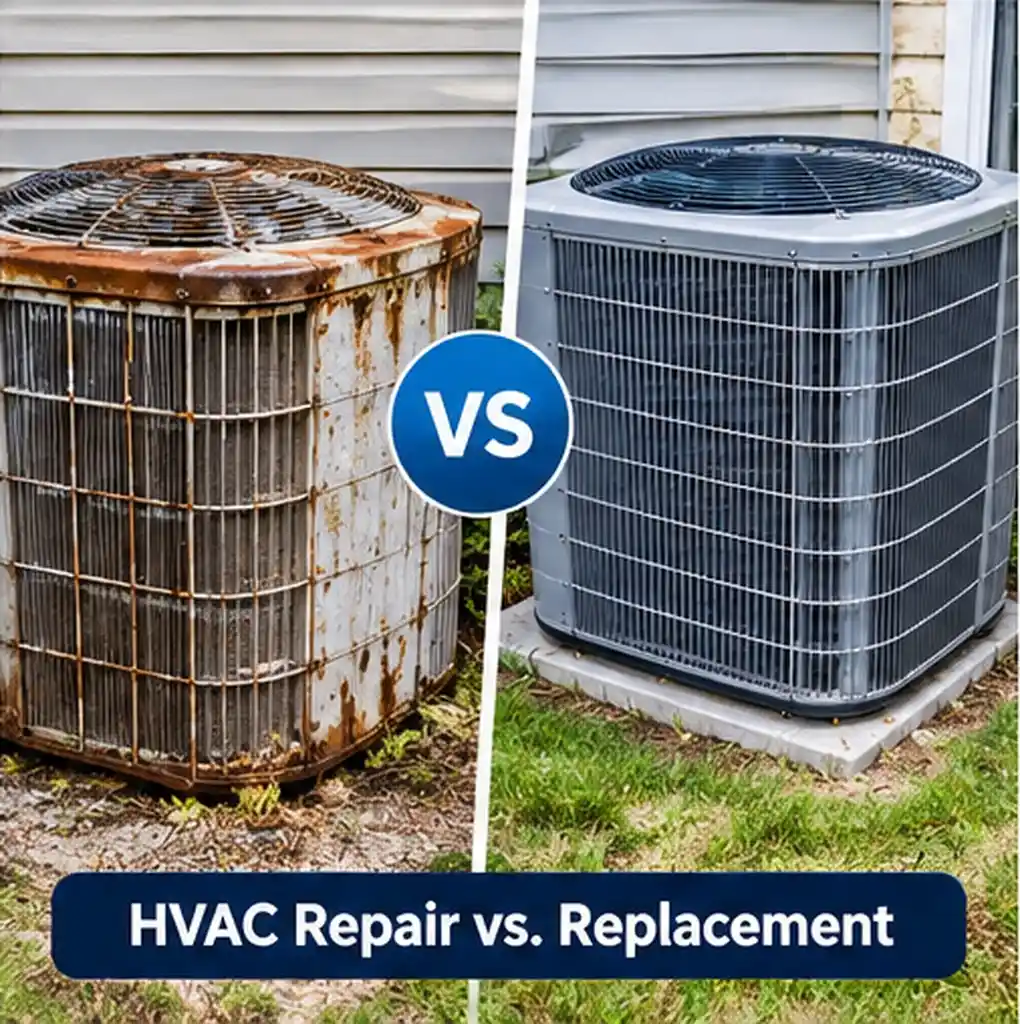
The repair-or-replace choice comes down to age, repair cost, and efficiency. Our certified HVAC technicians use the $5,000 rule as a starting point: multiply the system’s age by the repair cost. If the result tops $5,000, replacement usually makes more sense.
| Factor | Repair Makes Sense | Replace Makes Sense |
|---|---|---|
| System age | Under 10 years | 12+ years (AC/heat pump), 18+ (furnace) |
| Repair cost | Under 25% of new system price | Over 40% of new system price |
| Refrigerant | R-410A, small leak | R-22, or major R-410A leak |
| Repair history | First major repair | Third repair in two years |
| Comfort | Even temps, good humidity | Hot rooms, sticky air |
| Energy bills | Stable | Rising 10%+ year over year |
Expected Lifespans in North Alabama
| Equipment | National Average | Huntsville Reality |
|---|---|---|
| Central AC | 15 to 20 years | 12 to 15 years (long cooling seasons) |
| Heat pump | 15 years | 10 to 15 years (runs year-round) |
| Gas furnace | 20 to 30 years | 18 to 25 years |
| Ductless mini-split | 15 to 20 years | 15 to 18 years |
Heat pumps wear faster here because they work in both seasons. That’s not a flaw; it’s simply more total run time.
Pros and Cons of Repairing an Older System
Pros:
- Lower upfront cost
- No change to ducts or electrical
- Quick turnaround, often same day
Cons:
- Higher monthly energy bills
- Rising R-410A refrigerant costs
- Risk of another breakdown in peak heat
For quick fixes on newer units, our same-day AC repair team can usually restore cooling in one visit. Ask your technician for the system’s age and repair history in writing before you decide.
Heating and Air Conditioning in Huntsville AL: Cut Bills
Free and Cheapest Options: What’s Real and What’s Not
Free heating and air conditioning Huntsville AL offers usually mean free estimates on new system replacement, not free repairs. Diagnostic visits cost money because a trained tech spends time testing electrical parts, refrigerant pressure, and airflow.
| Offer | What It Usually Means | Watch For |
|---|---|---|
| “Free estimate” | No-cost quote on a new system | High-pressure sales on day one |
| “Free service call” | Fee waived if you approve the repair | Inflated repair price to cover it |
| “$49 tune-up” | Basic visual check | Upsells during the visit |
| Utility rebates | TVA EnergyRight incentives on qualifying upgrades | Must use a participating contractor |
| Assistance programs | Help for income-qualified homeowners | Limited funding, apply early |
The cheapest heating and air conditioning Huntsville AL option is rarely the lowest quote. It is the system that is sized correctly, installed to spec, and maintained twice a year. A $500 savings at install can cost $3,000 in extra bills over ten years.
Income-qualified homeowners can contact Community Action Partnership of North Alabama about weatherization and energy assistance programs. You can also request an upfront, itemized quote to compare against other bids.
How to Compare the Best HVAC Companies in Huntsville, AL
The best HVAC companies in Huntsville, AL share four traits: proper licensing, transparent pricing, fast response, and real local experience. Huntsville has a mix of national franchises, family-owned shops, and newer startups.
| Provider Type | Strengths | Weaknesses | Best For |
|---|---|---|---|
| National franchise | Brand standards, financing options | Pricing can follow corporate menus | Homeowners wanting a known brand |
| Long-standing local company | Deep area knowledge, loyal techs | May book out in peak season | Long-term service relationships |
| Small independent | Lower overhead, personal service | Limited after-hours coverage | Simple repairs |
| Local certified specialist (HVAC Repair Huntsville) | 7-day service, upfront quotes, 27-town coverage | Focused on HVAC only, not plumbing | Repairs, installs, and emergencies |

Checklist for Choosing a Provider
- Verify the license. Look up the contractor on the Alabama Board of Heating, Air Conditioning and Refrigeration Contractors site.
- Confirm EPA 608 certification. Techs must hold it to handle refrigerant.
- Read recent reviews. Focus on the last 12 months, not lifetime averages.
- Ask about load calculations. A company that sizes by square footage alone is guessing.
- Get pricing in writing. Flat-rate quotes beat open-ended hourly billing.
- Check availability. Ask whether they work weekends in July.
When people search for the best heating and air conditioning Huntsville AL provider, they want someone who shows up, explains the problem plainly, and charges what they quoted. Use the six steps above on every company you call, including ours.
Seasonal Maintenance Checklists
Maintenance is the cheapest way to cut repair costs. ENERGY STAR notes that a dirty filter and neglected coils force systems to work harder, and a properly maintained heat pump holds its rated efficiency far longer.
Spring AC Checklist (March to April)
- Replace the air filter (every 30 to 60 days during pollen season)
- Rinse the outdoor coil with a garden hose, top down
- Clear 2 feet of space around the condenser
- Pour a cup of diluted vinegar into the condensate drain line
- Test cooling before the first 85°F day
- Schedule a professional tune-up
Fall Heating Checklist (October to November)
- Swap the filter again
- Test the heat mode on a cool morning
- Check that the outdoor heat pump unit defrosts properly
- Inspect furnace flue pipes for rust or gaps
- Test carbon monoxide detectors near bedrooms
- Book your fall inspection
What a Professional Tune-Up Covers
| Task | Why It Matters |
|---|---|
| Measure refrigerant pressures | Catches leaks early |
| Test capacitors | Prevents the #1 summer breakdown |
| Clean evaporator and condenser coils | Restores efficiency |
| Check electrical connections | Prevents burnt wires and storm damage |
| Flush condensate drain | Stops water leaks and ceiling damage |
| Inspect heat exchanger (gas furnaces) | Protects against CO leaks |
| Verify thermostat calibration | Keeps temps accurate |
Our seasonal tune-up plans cover every item in this table. Put a recurring reminder in your phone for the first week of March and October.
Troubleshooting Before You Call
Many no-cool and no-heat calls have simple causes. Try these steps first, and you might avoid a service fee.
AC Not Cooling
- Check the thermostat. Confirm it’s set to “Cool” and below room temperature.
- Replace the filter. A clogged filter can freeze the coil.
- Reset the breaker. Flip both the indoor and outdoor breakers off, wait 30 seconds, then on.
- Look at the outdoor unit. If the fan isn’t spinning but you hear humming, turn it off. That usually means a failed capacitor.
- Check for ice. Ice on the copper lines means low airflow or low refrigerant. Switch to “Fan Only” and call us.
Heat Not Working
- Confirm the mode. Set it to “Heat” and raise the temperature 3°F.
- Check for “Aux” or “EM Heat.” If it’s always on, your heat pump may be failing.
- Look for a blinking light. Furnace control boards flash error codes; note the pattern.
- Inspect the outdoor unit. A heavy ice block that won’t clear points to a defrost problem.
- Smell for gas. If you smell rotten eggs, leave the house and call Huntsville Utilities.
For persistent cold-weather problems, our furnace repair and safety inspections and heat pump service cover both fuel types. Write down any error codes before you call, because it speeds up the diagnosis.
How Air Quality Testing Huntsville AL Protects Your Home
Emergency HVAC Service in Huntsville
An HVAC emergency is any failure that puts health or property at risk. In North Alabama, that means no cooling during a heat advisory, no heat below freezing, water leaking through ceilings, or any sign of a gas or CO leak.
| Situation | Emergency? | What to Do |
|---|---|---|
| No AC, indoor temp above 85°F | Yes, for elderly, infants, or pets | Call immediately |
| No heat, outdoor temp below 32°F | Yes | Call immediately; drip faucets |
| CO alarm sounding | Yes, urgent | Leave home, call 911 |
| Water pouring from indoor unit | Yes | Turn system off, call |
| Weak airflow, still cooling | No | Schedule a standard visit |
| Strange noise, system running | Usually no | Schedule within a few days |
Heat-related illness in Alabama can develop within hours in a closed home. Our crews work 7 days a week, and our emergency HVAC response team prioritizes homes with vulnerable residents. Save our number in your phone now so you’re not searching during an outage.
Local Service Area Coverage Across North Alabama
Local service means faster arrival and techs who know your neighborhood’s housing stock. A 1970s ranch in Decatur has different duct problems than a 2020 build in Madison.
| Area | Common Home Type | Issues We See Most |
|---|---|---|
| Huntsville (South, Jones Valley) | 1960s to 1980s homes | Undersized ducts, aging gas furnaces |
| Madison | Newer subdivisions | Builder-grade units failing at 8 to 10 years |
| Decatur | Older brick homes | Crawlspace ducts, humidity damage |
| Harvest / Toney | Rural and new builds | Long refrigerant lines, power surges |
| Hampton Cove / Owens Cross Roads | Two-story homes | Uneven upstairs cooling |
| Athens | Mixed older and new | Heat pump defrost issues |
| Meridianville / Hazel Green | Growing suburbs | Oversized systems, short cycling |
Our certified HVAC technicians frequently see these issues in local properties, so we stock the right parts on our trucks. You can view all 27 North Alabama communities we cover to confirm your town. If you’re comparing options for heating and air conditioning Huntsville AL wide, ask each company how long it takes them to reach your zip code.
Our Approach at HVAC Repair Huntsville
At HVAC Repair Huntsville, we keep things simple: diagnose first, quote in writing, and explain in plain English. As a Local Gov Certified company, we follow state licensing rules and EPA refrigerant regulations on every job.
- Upfront pricing: You approve the cost before we start.
- Right-sized systems: We run load calculations, not guesses.
- Honest repair advice: We tell you when a repair isn’t worth it.
- 7-day availability: Weekends and holidays included.
When replacement is the right call, our new system installation services include duct inspection and A2L-ready equipment. Good heating and air conditioning Huntsville AL service should leave you understanding your system better than before we arrived.
FAQ
How often should I service my HVAC system in Huntsville?
Twice a year. Schedule AC service in spring and heating service in fall. Our long cooling season makes the spring visit especially important.
Is a heat pump or gas furnace better for North Alabama?
A heat pump fits most Huntsville homes. Our winters are mild enough that heat pumps run efficiently most days. A dual-fuel system adds gas backup for the coldest nights.
Can I still repair my R-410A system?
Yes. R-410A is still available for servicing existing systems. Prices are rising as supply drops, so expect higher costs for refrigerant recharges over time.
Why is my upstairs so much hotter than downstairs?
Heat rises, and many two-story homes have one system with poor return airflow upstairs. Fixes include zoning, added returns, or a separate ductless unit for the second floor.
Are there still federal tax credits for new HVAC systems?
The federal 25C energy efficiency credit ended for equipment installed after December 31, 2025. Check TVA EnergyRight and your local utility for any current rebate programs.
How long does a new HVAC installation take?
Most residential replacements take one day. Jobs with new ductwork or electrical upgrades can take two to three days.
What size AC does my Huntsville home need?
It depends on insulation, windows, sun exposure, and layout, not just square footage. A Manual J load calculation gives the accurate answer.
What’s the most common summer AC failure you see?
A failed run capacitor. Heat and power surges from spring storms wear them out. It’s an inexpensive fix when caught early.
Take the Next Step
Comfort in North Alabama comes from a right-sized system, regular maintenance, and a technician who tells you the truth. Smart choices about heating and air conditioning Huntsville AL protect both your comfort and your budget for the next 15 years. Pull your system’s age and SEER rating off the outdoor data plate today, then call HVAC Repair Huntsville for a written repair-or-replace assessment.